



The EV4EU project was recently part of the “UK–EU Innovation & Collaboration Symposium on V2X & Smart Charging”, held on April 14th and 15th at the University of Salford in Manchester, UK. Hosted by the Center for Energy Sustainability, the event was a strategic meeting point for Innovate UK and Horizon Europe initiatives.
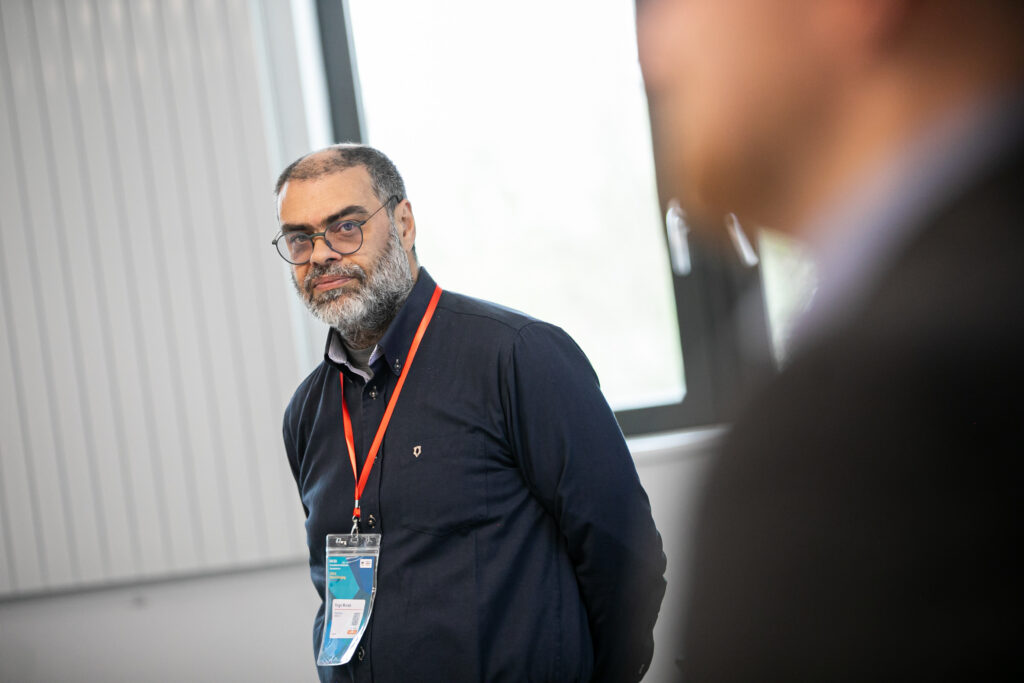
Representing the project’s mission to scale vehicle-to-everything (V2X) solutions across Europe was EV4EU project Coordinator Hugo Morais (INESC-ID), who contributed to three key sessions, bridging the gap between Horizon Europe research and practical market deployment.
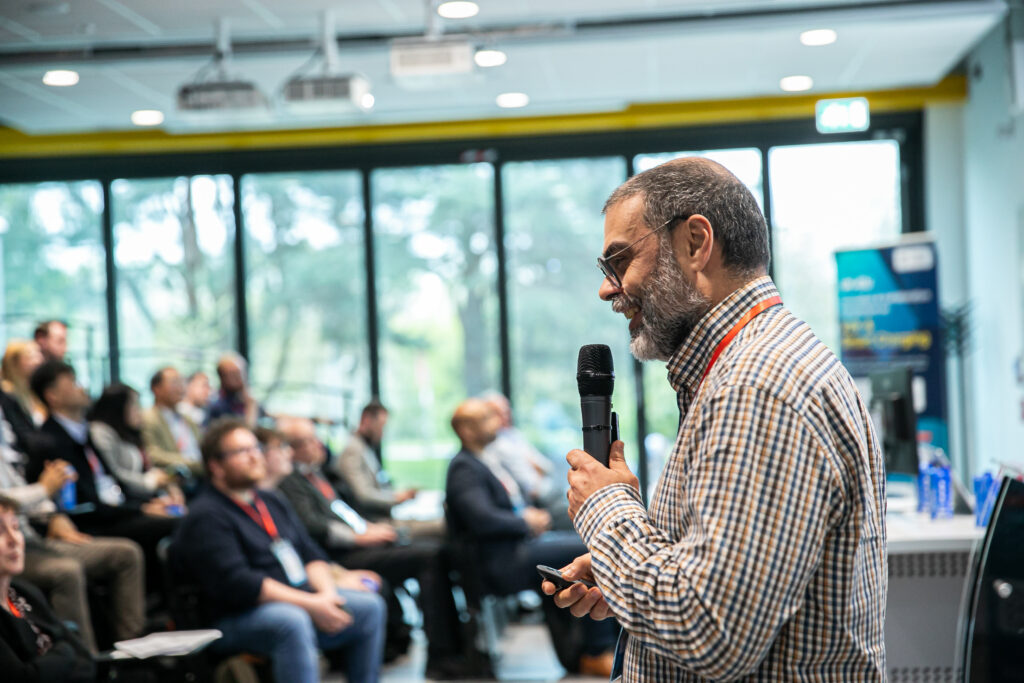
The Day-1 Closing Plenary, titled “Pilot Evidence and Deployment Readiness: What Works, What Fails, What Scales,” centered on the transition from research to reality. During this session, Hugo Morais shared insights into technical performance and interoperability, highlighting what works, what fails, and – most importantly – what is required to scale these technologies from testing to city-wide implementation. The discussion then moved beyond theoretical benefits to address the specific technical grid impacts that have proven effective, while also identifying where customer experience and commercial outcomes remain uncertain.
The discussion continued on Day 2, with Hugo Morais as part of “Parallel Session 7: Integrating V2X into Local Energy Systems and Network Operations”. The project coordinator highlighted research on integrating V2X into local energy systems and network operations, demonstrating how electric vehicles can serve as flexible assets for the grid. The participants explored how bidirectional charging can be effectively managed alongside site controllers and integrated with solar and storage.
Shifting focus to the regulatory landscape, Hugo Morais joined a panel of experts for “Parallel Session 3: Regulation, Grid Codes and Connection Approval” to discuss the regulatory obstacles and grid connection approvals necessary to make bidirectional charging a standard reality.
The session was dedicated to shaping co-developed recommendations designed to shorten approval times and reduce delivery risks. A major priority was clarifying the roles and liability gaps between Distribution System Operators (DSOs), OEMs, and aggregators to ensure that bidirectional charging becomes a standard, streamlined market reality.
The event brought together a strong ecosystem of regulators, network operators, OEMs, and researchers. As a key member of the V2X Cluster, EV4EU contributed to the some of the symposium’s primary outputs: evidence-based deployment guidance for smart charging, UK–EU alignment priorities to ensure cross-border compatibility, and the development of a joint white paper featuring practical policy recommendations.
“By transforming our pilot results into market-ready strategies, we are ensuring that the innovation developed within EV4EU directly informs and impacts the future of European energy policy,” noted the project Coordinator.
Through these interactive sessions, EV4EU continues to invest in international cooperation, ensuring that the transition to electric mobility supports a more resilient and sustainable energy grid.
Detailed Program here.

Comments are closed.