



The EV4EU project – which began in 2022 and concludes in May 2026 – reached another milestone on April 10, with the final event of the Portuguese demonstrator in São Miguel, Azores.
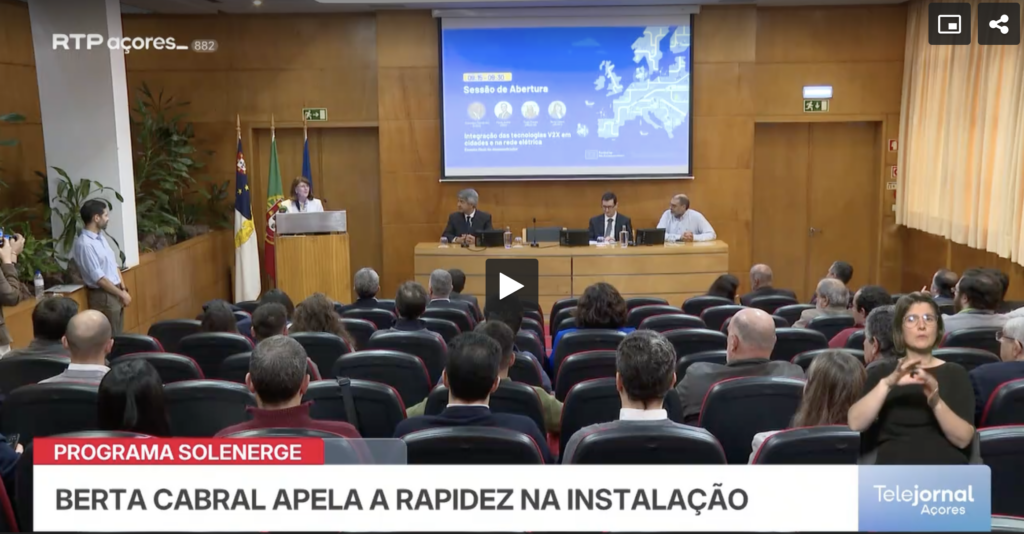
Under the theme “EV4EU: From V2X Innovation to Implementation in Europe’s Energy System,” Portuguese project partners organized a one morning session at LREC facilities, to present the results of their research and real-world testing of V2X (Vehicle-to-Everything). The lessons learned from the Portuguese Demo set the stage for a broader discussion regarding the future of electric mobility in the Azores.
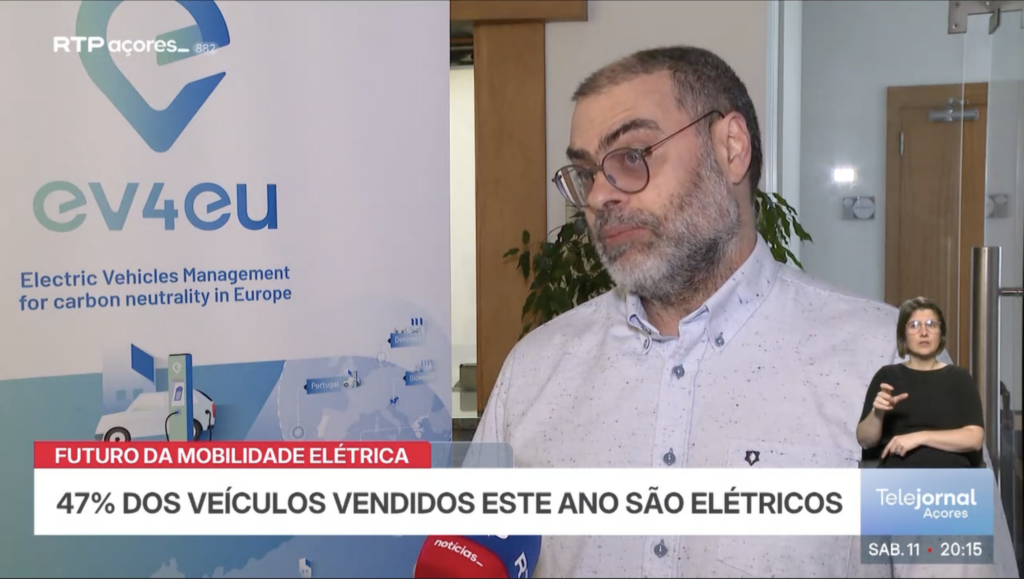
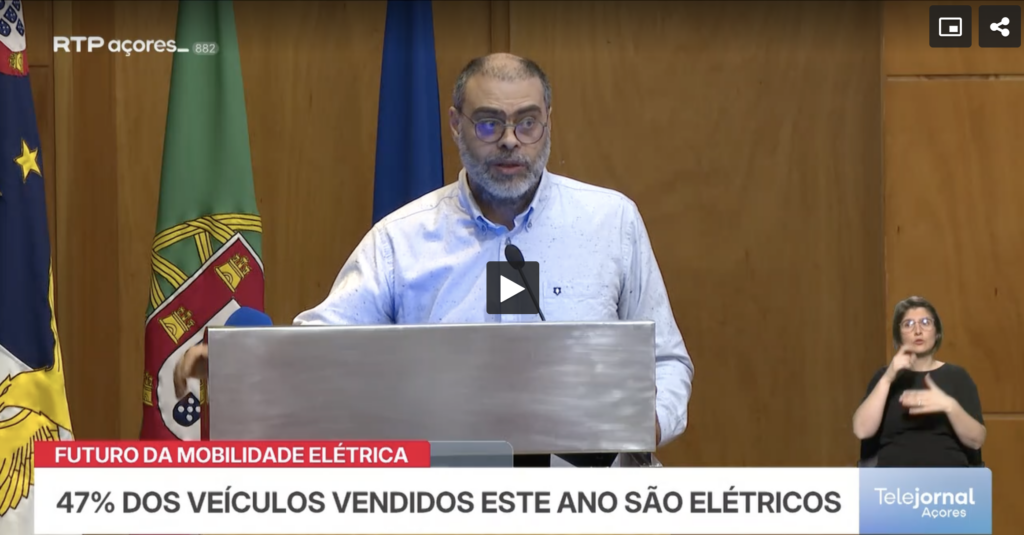
According to recent data, there were approximately 400 electric vehicles (EVs) in the whole archipelago four years ago; today, there are more than 3,000 just in the island of São Miguel. Furthermore, official statistics indicate that 47% of new vehicles sold in the Azores this year are electric. Coupled with the increasing price volatility of fossil fuels, this provided the ideal timing to discuss larger investments in renewable energy and strategies to democratize electric mobility.
To start the debate, the final event kicked off with an opening session that set the tone for the meeting, bringing together key speakers from the energy and infrastructure sectors of the Azores region.
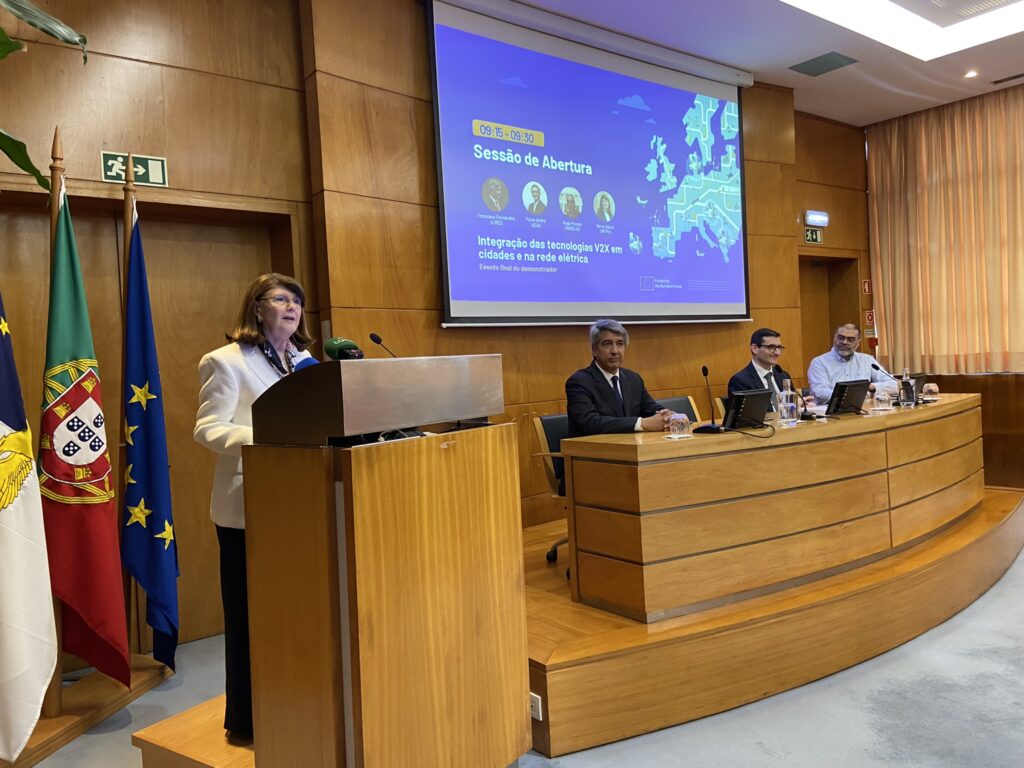
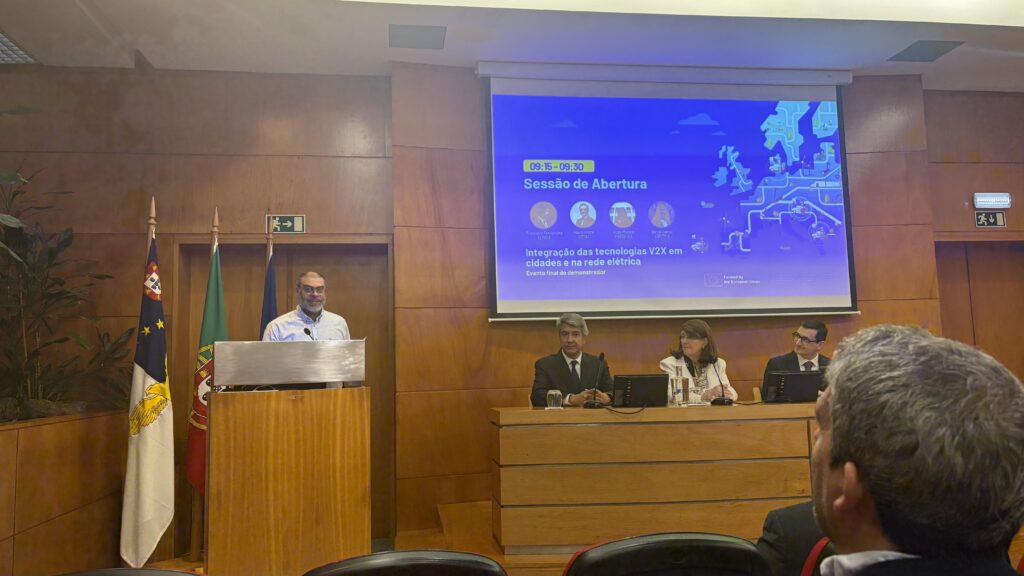
Francisco Fernandes, Director of the Regional Civil Engineering Laboratory (LREC), began by sharing the importance of research mobility projects like EV4EU, which focus on infrastructure and strategies for managing electric mobility, ensuring that the energy transition is carried out with maximum resilience and safety for the urban environment.
Paulo André, Chairman & CEO at Electricidade dos Açores (EDA), presented an operational perspective on energy management of isolated systems such as the Azores, emphasizing that V2X technology enables the transformation of electric vehicles from mere consumers into strategic assets capable of stabilizing the grid and avoiding peak loads.
Hugo Morais, Coordinator of the EV4EU project at INESC-ID, addressed the importance of defining strategies to make electric mobility accessible to all. According to the researcher, the electric grid must be at the centre of any discussion on sustainable mobility. He also emphasized the need for infrastructure investment stating that “Electric mobility isn’t just possible, it’s an opportunity.”
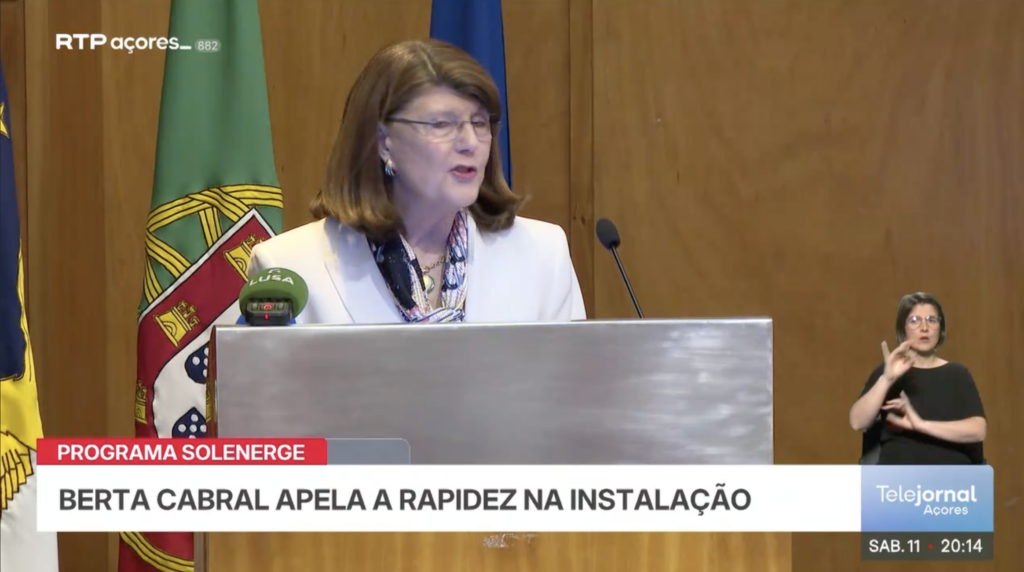
Closing the opening panel, Berta Cabral, Regional Secretary for Tourism, Mobility, and Infrastructure (SRTMI), reinforced the political commitment to decarbonization, positioning the Azores as a living laboratory that offers valuable lessons for all of Europe on integrating green mobility into a sensitive natural ecosystem.
From Pilot to Practice: Results and Demonstrations
The first part of the meeting was then dedicated to presenting project lessons and technological demonstrations.
Samuel Matias (EDP NEW) introduced data from the project’s real-world implementation in the Azores. The project tested operational viability across three demo sites: smart fleet management at the EDA Campus, buildings (V2B) at LREC, and residential testing in seven households.
Among the lessons learned were:
- Reliability: failures in communication or usage transparency discourage EV users; the technology must act like “invisible” to ensure adoption.
- Technical Limitations: not all EVs support bidirectional (V2G) operation. The need for vehicle replacements during the project and the lack of V2G support in some EVs disrupted the data flow.
- Support: Research projects don’t have the structure to give 24/7 technical support to users. Market transition would require a dedicated technical support team.
Following an analysis of the lessons learned, researcher Cindy P. Guzman (INESC-ID) conducted a live demo of the software solutions and user interface developed by INESC ID. Through Smart Charging, the system evaluates consumption profiles, though challenges remain – such as obtaining real-time battery data (SoC) from certain vehicles and the unpredictable nature of real-world usage compared to theoretical models. To overcome these barriers, a specific interface was developed to collect travel needs directly from the driver, feeding precise data to the algorithm.
Currently, the platform already demonstrates technological maturity for real-time visualization and is progressing toward future commercial exploitation.
From Theory to Implementation
After the technical presentations, the highlight of the event was the round table moderated by Marta Brandão (EDP NEW). The debate, which brought together representatives from LREC, DREn, EDA, SEL, and INESC-ID, focused on the challenges of scaling these solutions from the “pilot” level to a daily reality for citizens.
The participants discussed regulatory barriers, the need for infrastructure incentives, and the crucial role of interoperability between different manufacturers and energy systems.
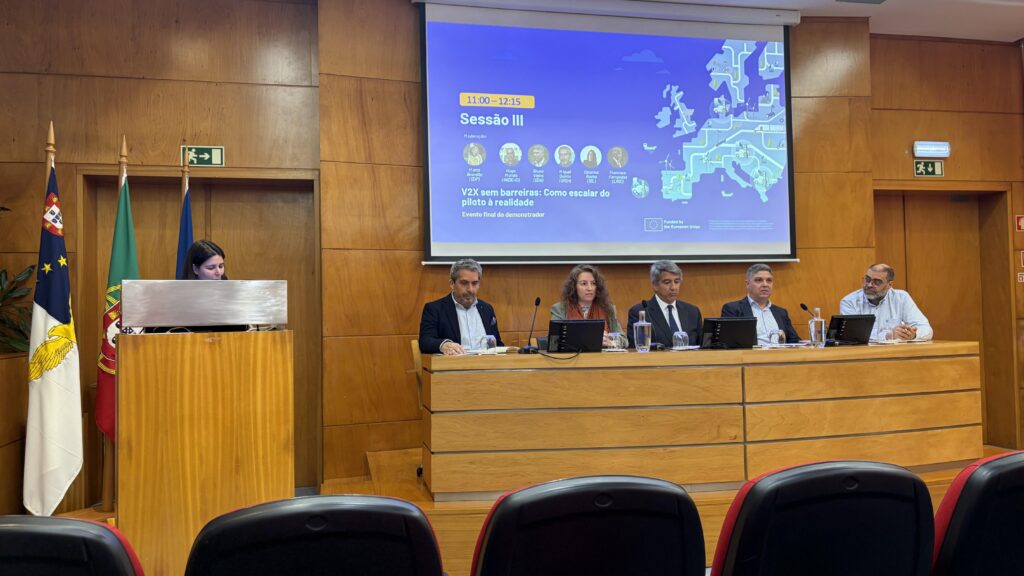
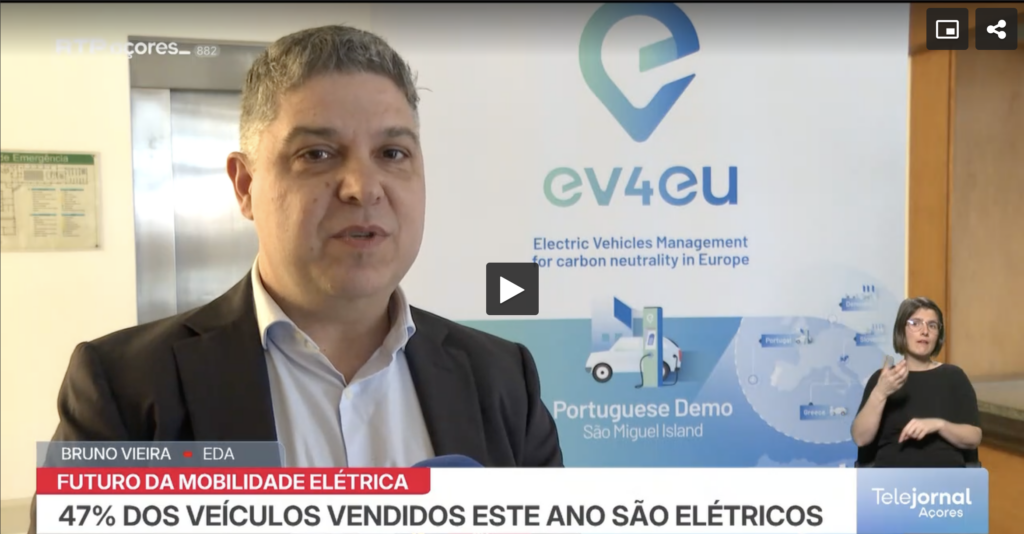
Bruno Vieira (EDA) highlighted that the domestic sector presents the greatest immediate commercial viability. For the system to work on a large scale, he pointed to the need for an integrated ecosystem, where the end-user feels real advantages, and someone must play the role of intermediary, an essential element to connect the supply of vehicles to the demand of energy distributors.
Legal certainty was the central theme for Miguel Quinto (DREn). According to the expert, the EV4EU project was fundamental to designing the necessary regulatory “skeleton” and emphasized that clear regulation is the only way to generate user confidence, allowing them to understand the financial and operational benefits of returning energy to the grid.
Hugo Morais (INESC-ID) brought the focus to the fast-growing technical evolution. With the change in European Commission standards for the CCS system in the very year the project started (2022), the project needed to adapt to avoid becoming obsolete before it ended. Morais shared that interoperability technology between different brands and systems is still in a maturation phase but also mentioned that the vision is for all cars to have bidirectionality soon, and that countries like the Netherlands already see this as an added value for grid security.
In his intervention, he referred to the recent change in MOBI.E‘s role and the complexity it introduced to the Portuguese e-mobility landscape. Previously, MOBI.E guaranteed compatibility and integration for everyone under the same standards. By removing MOBI.E’s centralized control over tests, the market gained speed but runs the risk of technical fragmentation. The solution presented is to develop a regulation that is not just bureaucratic but also technically descriptive, so that the OCPP (Open Charge Point Protocol), which allows a charging station to communicate with the central management system, is interpreted the same way by everyone.
“It is not enough to have the protocol (OCPP); clear regulation is needed in its preparation to avoid distinct interpretations that prevent interoperability,” adds Hugo Morais.
All speakers were unanimous in considering that, even if V2G (Vehicle-to-Grid) is the most promising solution for balancing the energy system and for maximizing renewables, its success depends on some key factors:
- Grid flexibility to manage consumption peaks;
- Simplify legal measures to encourage citizen participation.
- Support technological standardization to keep up with the 2024/2025 European standards.
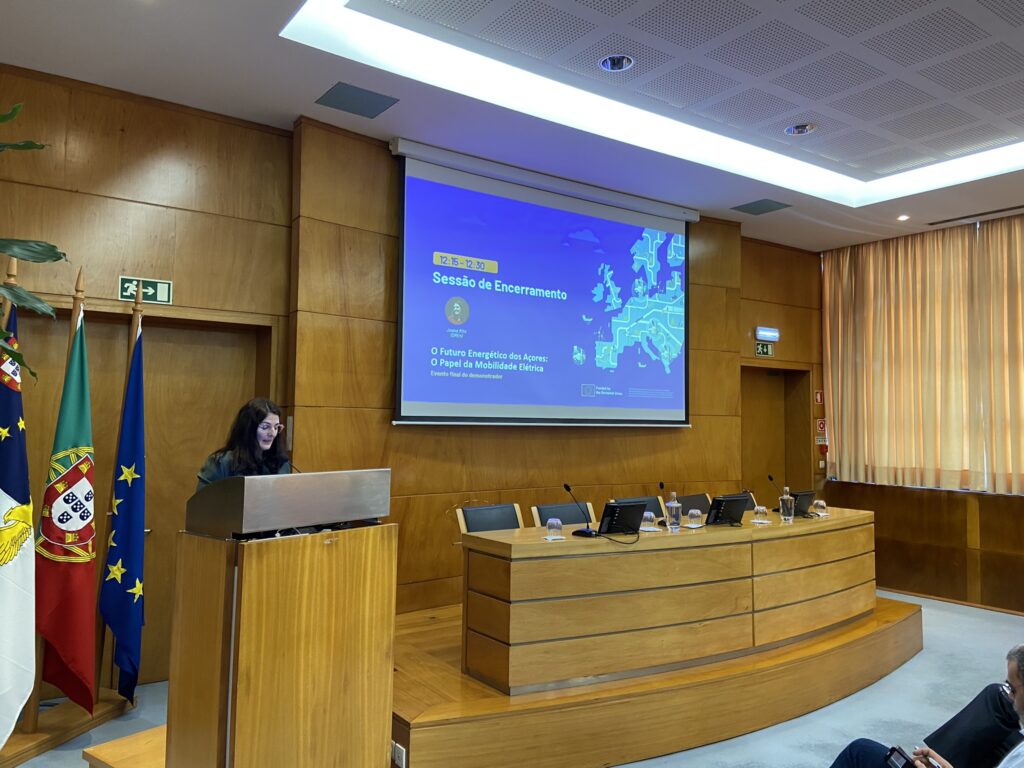
The session was closed by Joana Rita, Director at the Regional Directorate for Energy (DREn), who reinforced the region’s commitment to continuing to support innovation projects that place the Azores at the forefront of the European energy transition.
Overall, the success of the EV4EU Portuguese demonstrator is proof that electric mobility, when integrated with the grid (V2G/V2X), is the key to a cleaner, more efficient, and user-centered energy system.
After the closing event in the Azores, the next stop is the project’s final event at the Transport Research Arena (TRA 2026) Conference in Budapest, Hungary, on May 19th. By bringing together experts and key stakeholders, the session will highlight the project’s main achievements across all four demonstrators. It will also serve as a collaborative platform for the V2X Cluster to shape the future of V2X technology within the European energy transition.
More information about EV4EU final event here.
The Portuguese event was featured in several Azorean regional media outlets, including: RTP Azores TV (from minute 13:55), Correio dos Açores, SOL, CMJornal, Ambiente Online, Notícias ao Minuto, Motor 24.
Comments are closed.